NoEndPrint
NoEndPrint is a print house in Egypt. We built its site as a statically exported Next.js application: Arabic-first, right-to-left, organised around search intent, and pointed at a single conversion — a WhatsApp enquiry that already knows what the visitor was reading.
noendprint.comVisit the live site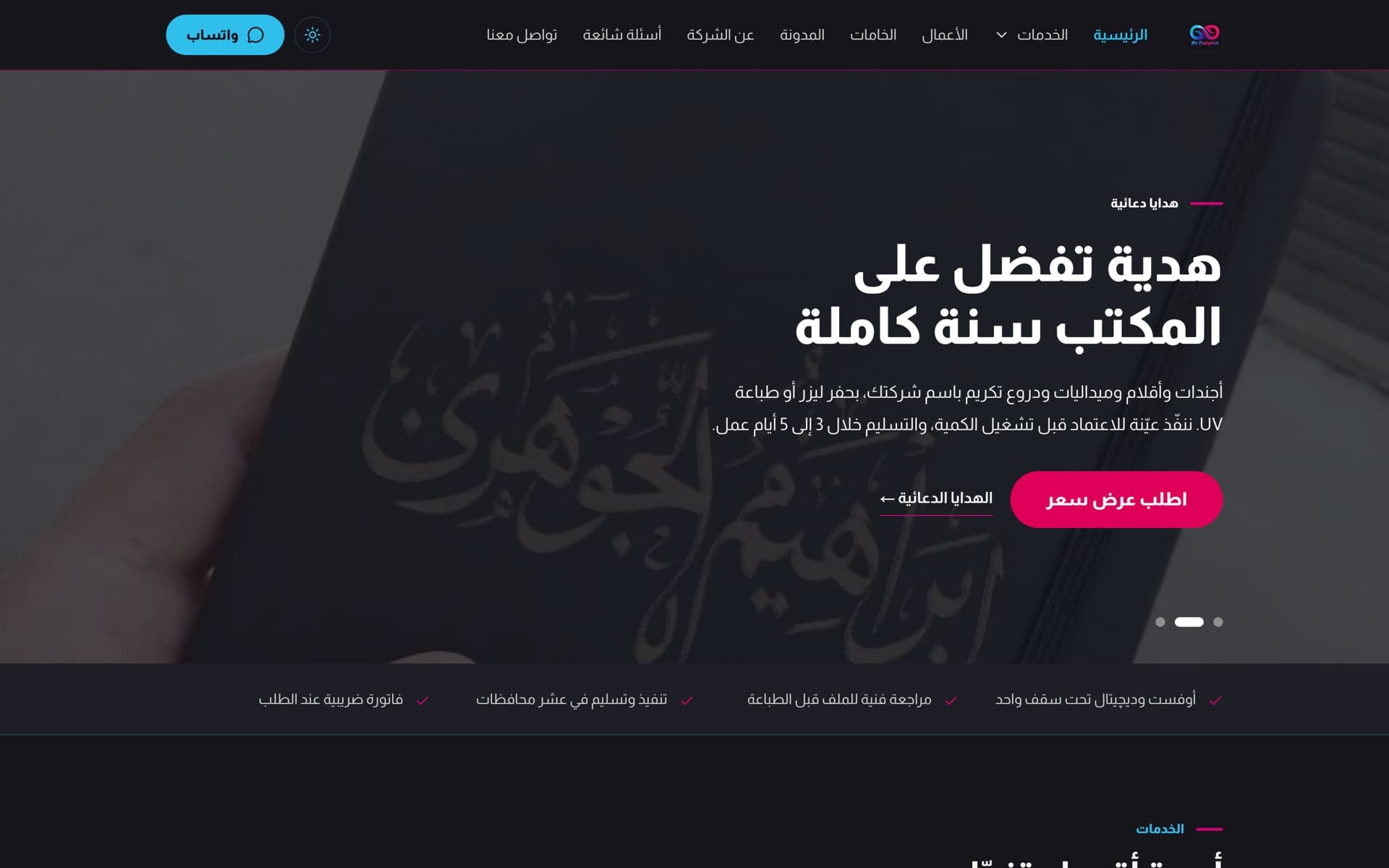
- Type
- Delivered project
- Languages
- Arabic (RTL)
- Scope
- Content architecture, build, SEO, lead capture
- Platform
- Web (static export)
The challenge
Print buyers do not search for a company, they search for a job: business cards on 350gsm board, a flex banner for a shopfront, fifty mugs with a clinic logo. A single brochure page cannot answer any of those queries, and a generic contact form is a worse entry point than the WhatsApp thread the customer is already comfortable with.
The site also had to be honest about what was not yet known. Prices had not been supplied, and inventing them would have been the easy, wrong answer.
The solution
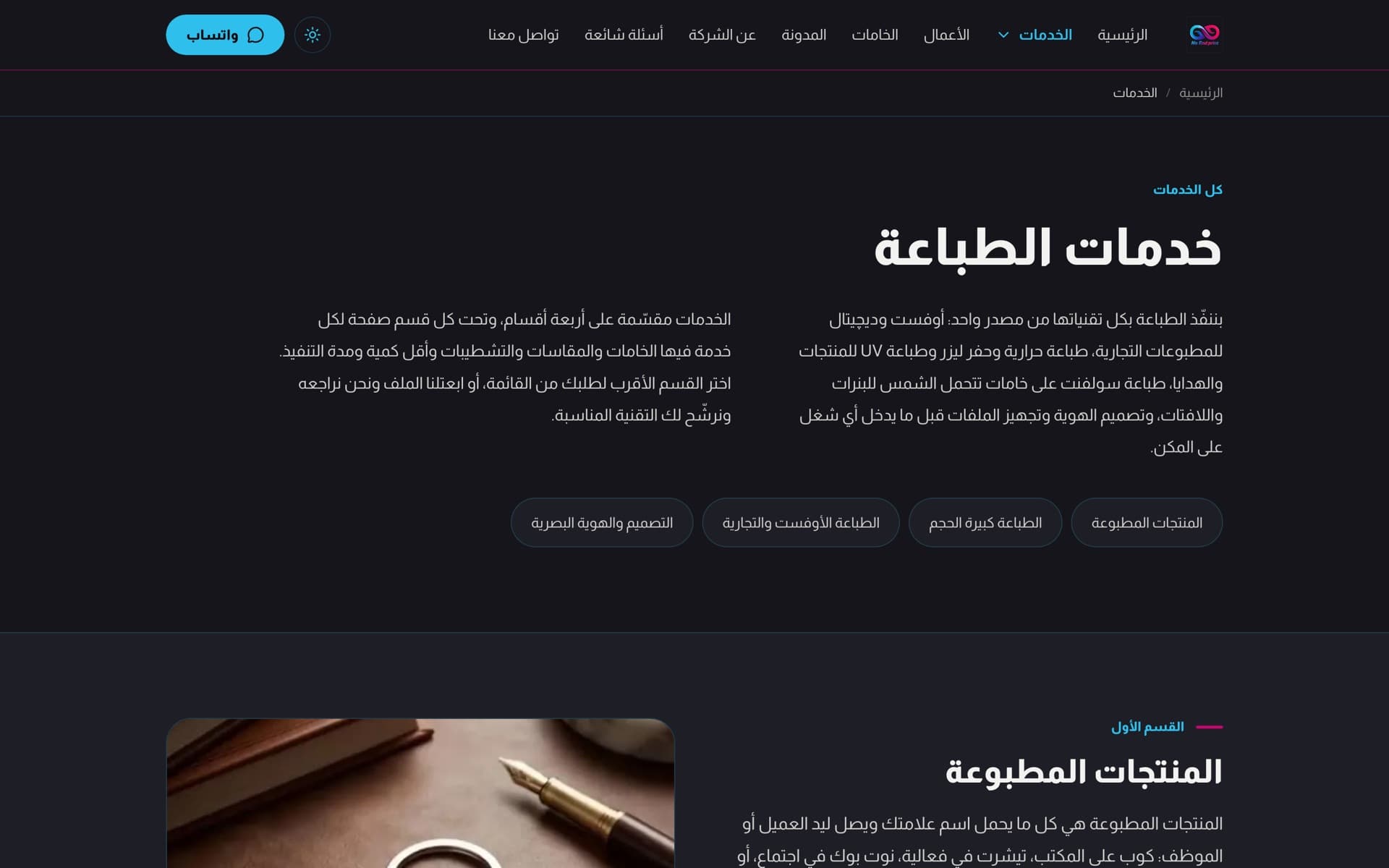
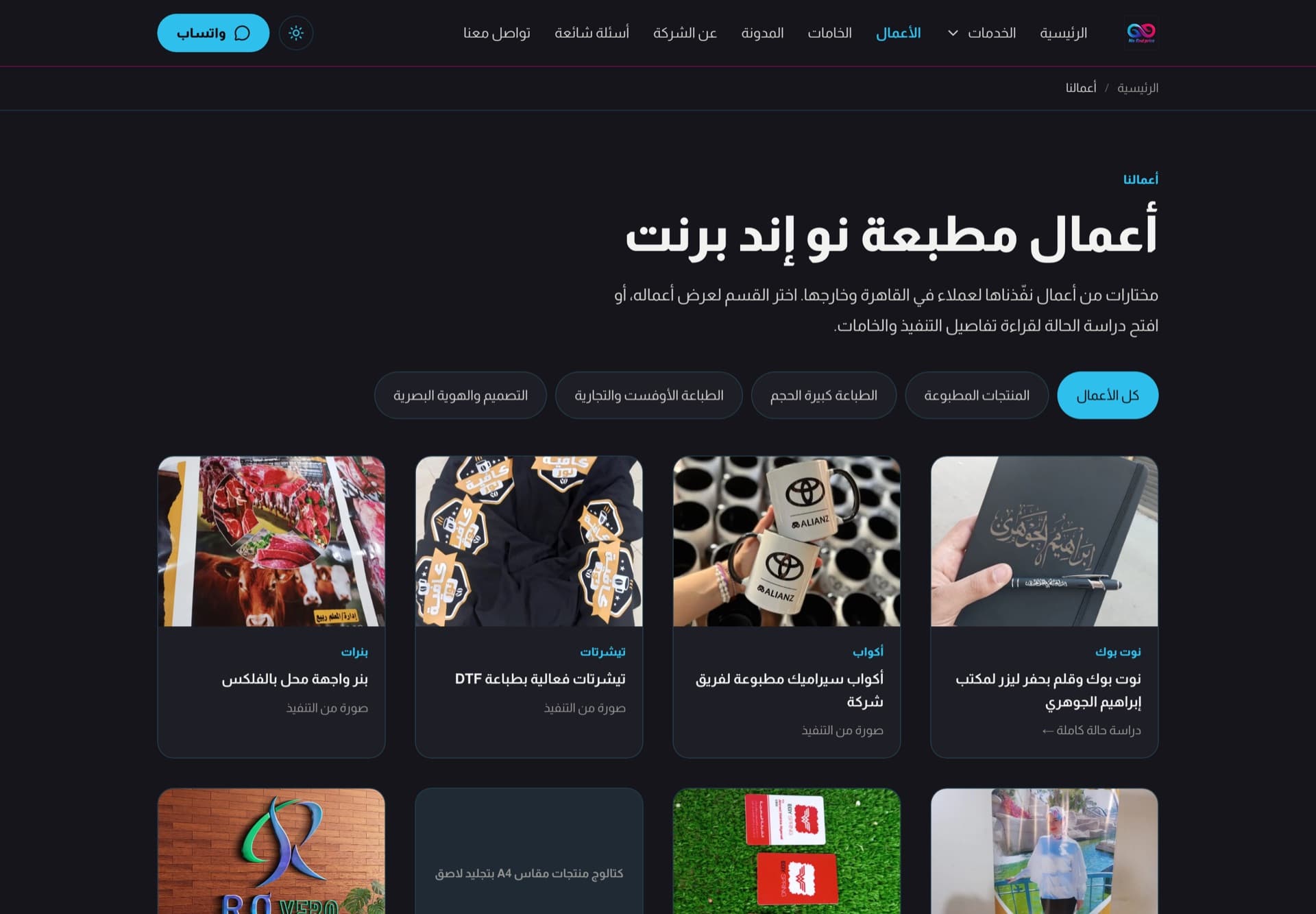
We modelled the content as four service pillars, each with its own child services, plus work, materials, FAQ and blog sections. Routes come from a typed registry with an `indexable` flag per entry, so the sitemap and robots rules are derived from the content rather than maintained by hand.
Every conversion path leads to WhatsApp with a pre-filled, context-aware message that names the service the visitor was reading and links back to the page — so the shop opens a conversation that has already started, not a cold "hello".
Where the client had not supplied figures, the price table renders a dashed placeholder instead of a number, and the code says why. Filling in one string publishes a real price; nothing else has to change.
The whole site exports statically. There is no server to keep alive, no framework CSS to ship, and the photography is served as responsive WebP at three widths.
Key capabilities
Arabic-first, RTL layout
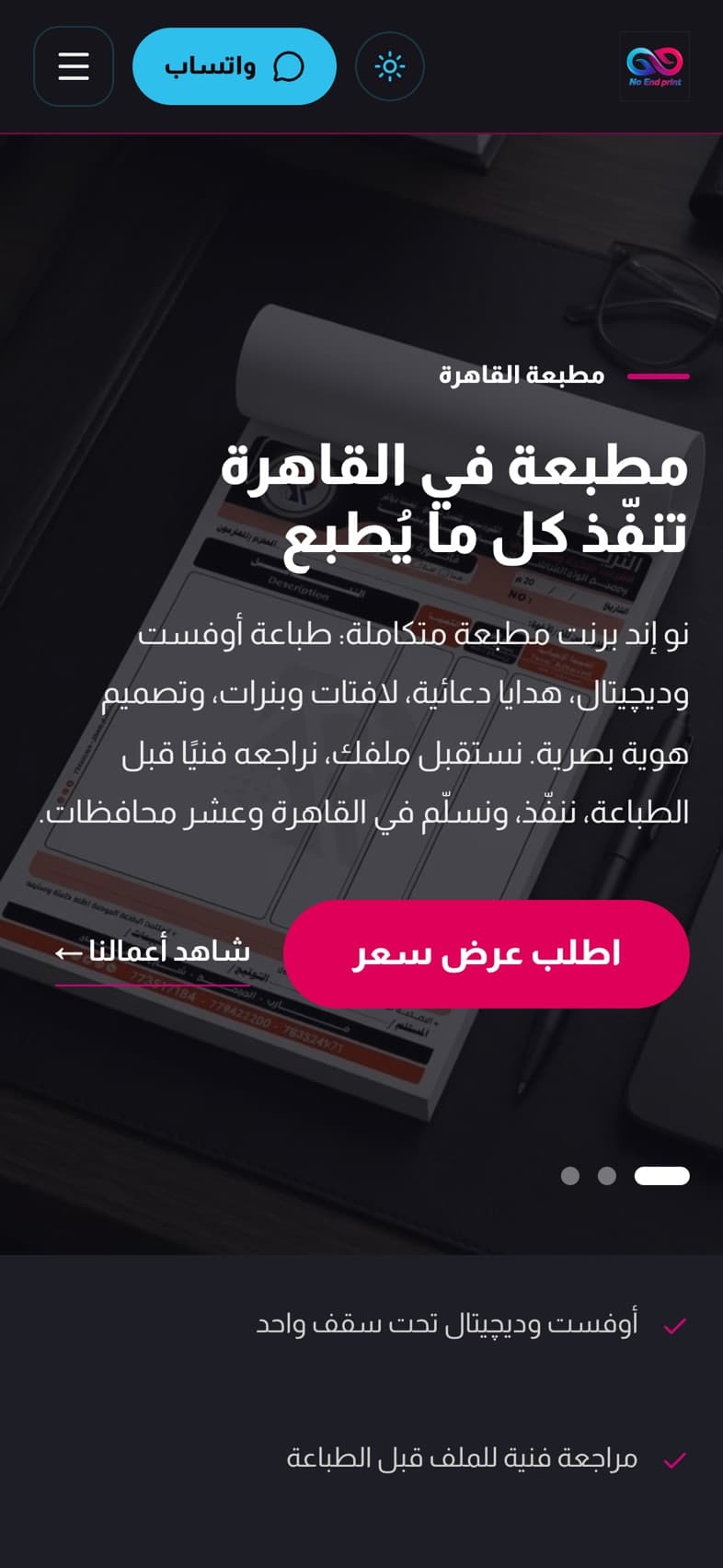
Arabic content, terminology and right-to-left layout as the primary design — not a mirrored English site.
Search-intent information architecture
Pillar and service pages built around the jobs customers search for, with a route registry driving the sitemap.
Context-aware WhatsApp enquiries
Every CTA opens WhatsApp with a message naming the service and linking the page the visitor came from.
Quote requests with file upload
A quote form for customers who want to send artwork rather than chat.
Structured data and sitemap
JSON-LD for the business and its services, and a sitemap generated from the content registry with per-route indexability.
Light and dark themes
A theme toggle with no flash on first paint.
Screens
Technology
- Next.js 16 (App Router)
- React 19
- TypeScript
- Static export
- CSS (no framework)
- Structured data (JSON-LD)
Confirmed from the project’s own codebase.
What we built
- A statically exported, Arabic-first site covering four service pillars, a work gallery, a materials guide, an FAQ and a blog — with no CMS, no server, and no client-side framework CSS.
- A content layer where unknown facts are visibly pending rather than invented, so the site can be filled in over time without a rebuild.
- A conversion path built on the channel this audience actually uses, with the context carried into the first message.
- No enquiry-volume or ranking numbers are published here — we have not verified them.
Next case study
KevtaOur product · SaaS issue trackingHave a similar product in mind?
Tell us what you are building. We will tell you honestly whether we are the right team for it.